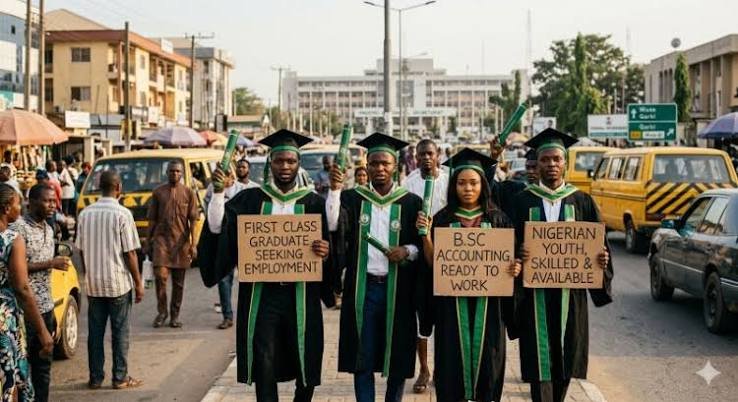
Nigeria’s education landscape is undergoing a massive structural reset. Long burdened by outdated learning frameworks, high numbers of out-of-school children, and underfunded classrooms, the federal government is launching aggressive reforms to completely rethink how Nigerian youth learn and compete globally.
Seamless transition: The new policy eliminates the stressful, hard break between junior and senior secondary loops. Learners proceed straight through high school before entering tertiary institutions.
Strict curriculum control: Launching in September 2026, the sweeping National Textbook Ranking System (NTRS) legally bars public schools from using non-ranked learning materials to ensure unified educational quality.
Massive Financial Injections
The $552 million HOPE-EDU program: Backed directly by the World Bank, this massive capital injection aims to upscale education delivery across 65,000 public primary schools.
Impact scale: The mega basic education push targets learning outcomes for 29 million children while upskilling 500,000 public educators.
A 150% UBEC funding spike: Landmark legislative changes are seeking to bump the Universal Basic Education Commission’s (UBEC) funding formula from 2% to 5% of the Consolidated Revenue Fund. This move aims to expand yearly basic school funding to a historic ₦3.42 trillion.
Digitalization & Technical Evolution
Going fully digital: By 2026, the West African Examinations Council (WAEC) will transition to fully digital testing environments. Schools must equip themselves with designated laptop fleets and CCTV security monitoring to qualify as testing centers.
Modernized curriculum: To combat sky-high youth unemployment, new federal directives have integrated core technical subjects like Basic Digital Literacy and solar panel installation into early school years.
Student tracking: The expanding Digital National Education Management Information System (NEMIS) uses unique Learner Identification Numbers (LIN) to map out-of-school children and seamlessly trace their integration back into formal classrooms.
The roadmap from foundational deficits to a knowledge-based digital economy is filled with infrastructure obstacles. However, by matching ambitious systemic overhauls with historic international capital, Nigeria is building a highly resilient foundation for its brilliant young minds.
To refine this post for your blog, please share:
Who is your target audience? (Parents navigating the new system, educators, or policy experts?)
Would you like to focus on a specific aspect? (Should we explore the student loan fund, NELFUND, or focus entirely on primary schools?)
What is the desired call to action (CTA)? (Leave a comment, download an analysis, or share to social media?)